Silvestra
Off-the-shelf templates would have compromised the brand's artisanal soul. I engineered a bespoke headless solution from scratch, ensuring the digital experience feels as premium as the physical product.
Core Web Vitals
Lighthouse
Engineering narrative.
The Visual System
Tokenizing the Brand
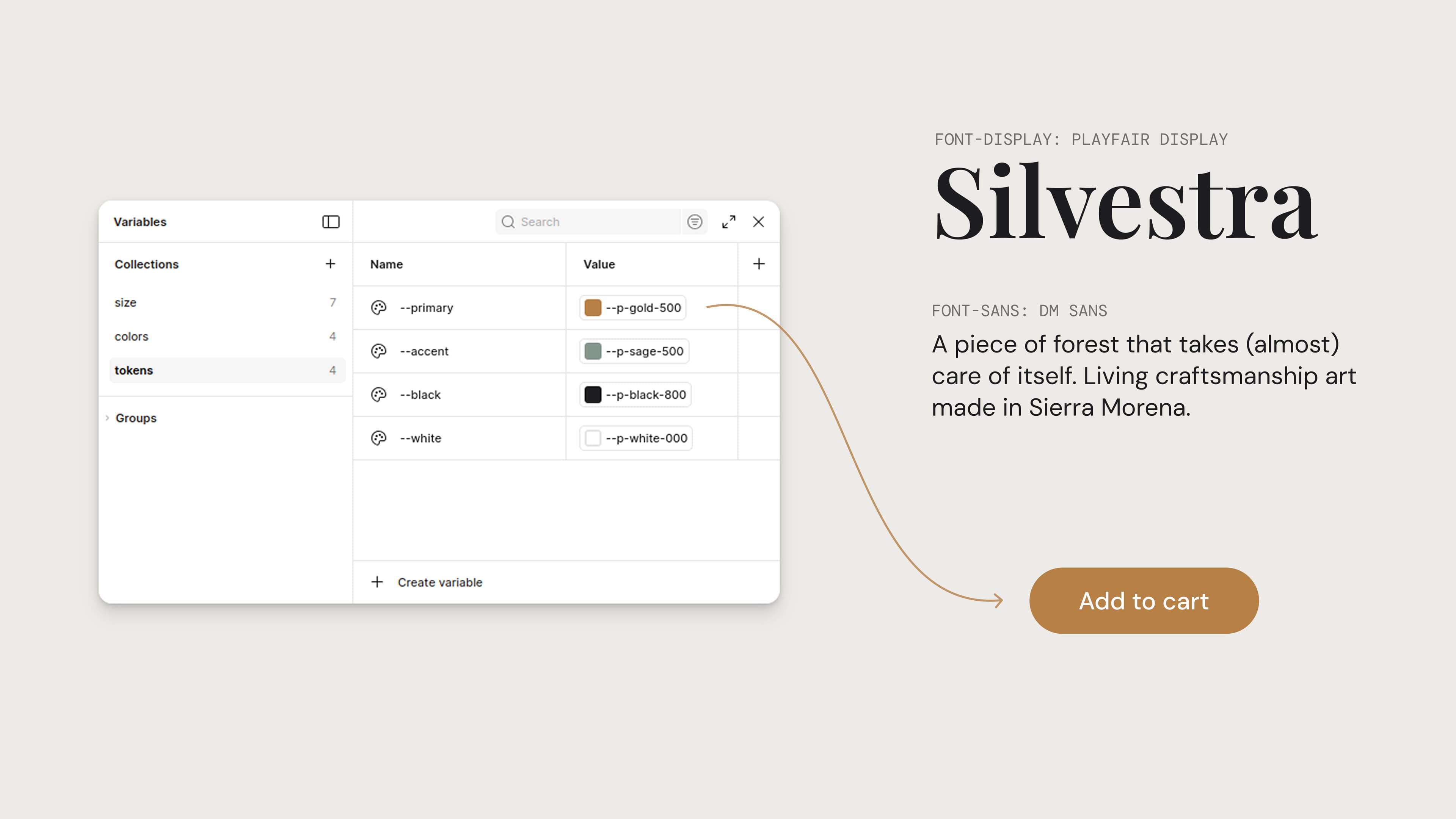
Before writing code, I systematized Silvestra's identity in Figma. I defined a strict set of tokens for typography (Acorn & Geist), spacing, and an earthy color palette. This isn't just 'drawing'; it's defining the physics of the interface so development becomes purely execution.
The Translation
Figma to CSS Variables
I mapped the Figma tokens directly to CSS variables using Tailwind v4's new engine. Instead of magic numbers, I use semantic variables. This creates a single source of truth: if I update '--p-gold-500' in the root, the entire 'Accent' system updates automatically across the app.
The Architecture
Decoupled UI Logic
I didn't want the UI to be trapped inside the Shopify project. I built the design system in a separate repository using Radix UI and exported it as a private package. This separation of concerns ensures that the 'Atomic Interactions' are pure, testable, and reusable, unburdened by the complex business logic of the e-commerce store.
Type-Safe
Data Pipeline
Bridging the gap between Shopify's flexible API and a rigid TypeScript frontend. I implemented GraphQL Codegen to ensure that if the API changes, the build fails before production, enforcing strict contract adherence across the stack.
Headless CMS
Shopify APISource of truth for product data & checkout logic via Storefront API.
GraphQL Layer
Typed QueriesPrecise data fetching preventing over-fetching and reducing payload size.
CodeGen Engine
Type Safety GuardAuto-generated TypeScript definitions tailored to the schema.
Server Components
Next.js 15 RSCHydrated interactive islands served from the Edge.
This config automatically scans src/lib/shopify for GraphQL queries and generates TypeScript interfaces in real-time.
Atomic
Interactions.
Test the 'Button' component. It's not just a color change; it includes an internal loading state handler and specific spring physics for the click interaction.
The technical
pillars I build on.
I’m naturally curious, but I’ve learned that innovation needs a solid floor. For Silvestra, I established these core principles not as constraints, but as the stable ground that allows the design to truly shine without breaking.
Real-world Accessibility
For a real store, accessibility is just good business. I used Radix UI to ensure that anyone, regardless of how they navigate, can buy a terrarium without friction. It's about empathy through code.
The 100 Score Goal
In e-commerce, speed is revenue. I obsessed over every millisecond, using Next.js 15's architecture to make sure the store feels instant, even on slow mobile connections.
Organic Physics
Static feels cheap. I used Framer Motion to inject real physics—damping and stiffness—into the UI. This creates tactile, 'expensive' interactions that feel organic, strictly maintaining 60fps.
Type-Safe Commerce
I don't like surprises in production. By integrating GraphQL Codegen, I made sure that every product price and description is strictly typed from the Shopify schema to the UI.
Engineering
Trade-offs.
Every project is a series of decisions. Here are the critical pivot points where I had to balance technical purity with business reality.
CSS as an API
I stopped writing styles and started consuming a system. Treating Tailwind not just as utility classes, but as a strict API for my design tokens, removed all guesswork. It turned the subjective task of 'making it look good' into an objective engineering process.
AI Orchestration
I treat AI not as a replacement, but as a high-speed engine that needs a steering wheel. I use granular, highly supervised prompts to guide Cursor through micro-iterations. It allows me to skip the boilerplate and focus purely on architectural decisions, maintaining total control over the code quality.